Citizen experience
How do users rate the service?
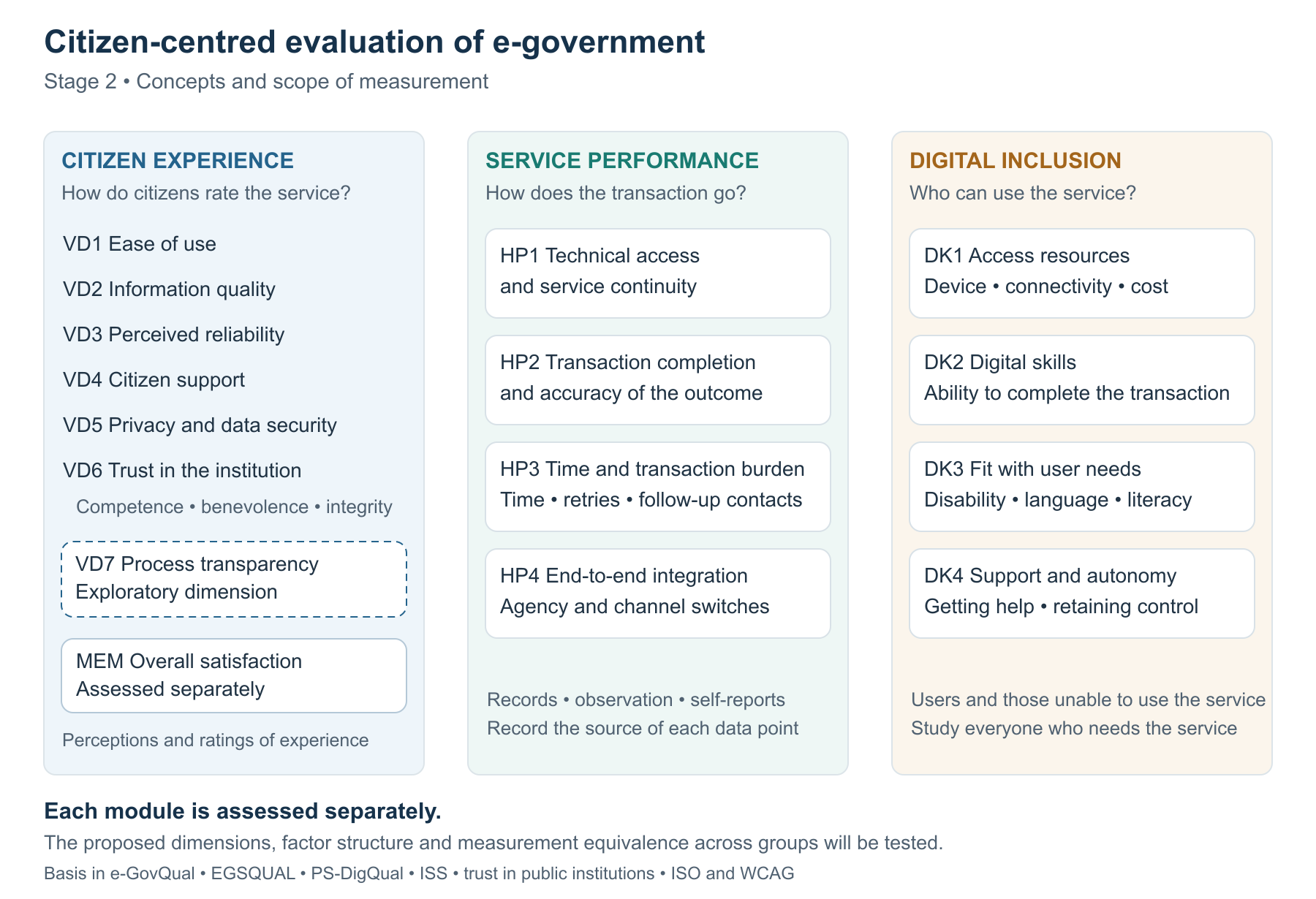
Ease of use, information quality, reliability, support, privacy and trust in the public institution. Overall satisfaction is assessed separately.
AZERBAIJAN · RESEARCH PROJECT
DIGI-AZ studies how people in Azerbaijan use digital public services, whether they can complete their transactions and what barriers they face.

ABOUT THE PROJECT
Being satisfied with a service, completing a transaction and being able to access the service are distinct experiences. DIGI-AZ aims to measure each separately and compare results at the service level.
MEASUREMENT MODEL
How do users rate the service?
Ease of use, information quality, reliability, support, privacy and trust in the public institution. Overall satisfaction is assessed separately.
How does the transaction end?
Technical access, transaction outcome, time spent, repeat attempts and required channel switches. Citizen reports and administrative records provide distinct sources of evidence.
Who can use the service?
Access to devices and the internet, digital skills, language, accessibility and support. The study also includes people who need the service and are unable to use it.
RESEARCH PROGRESS
The literature review, measurement model, draft survey and validation plan are ready. The next stages will test the instrument and assess results for individual services.
RESEARCH MATERIALS
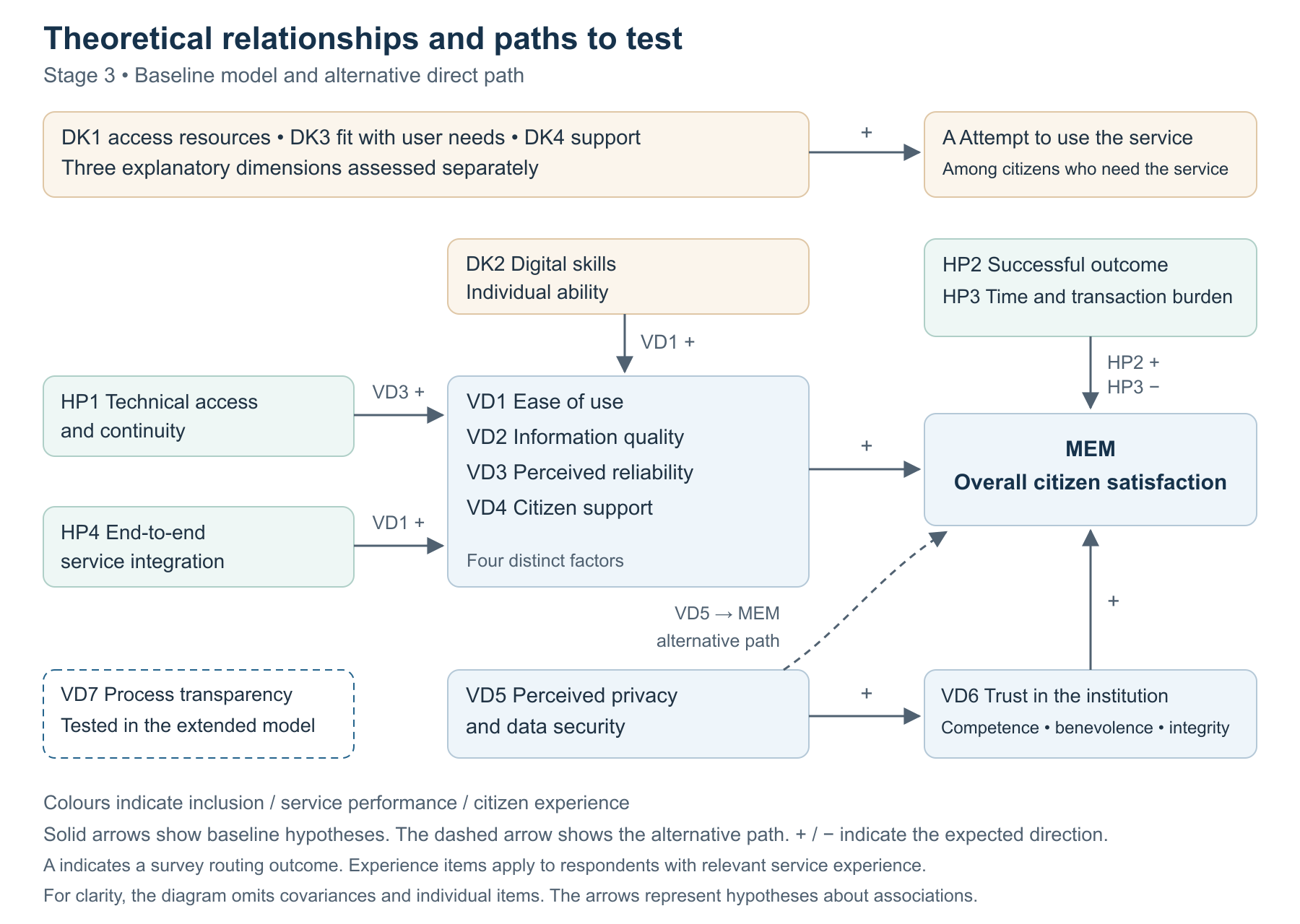
The diagrams show the measurement dimensions and the relationships the study will test. They present the study’s theoretical framework.
Studies used to select the measurement dimensions.